Showing posts with label Writing. Show all posts

March 24, 2016

Iridescence: A Lyric Exploration


That which She who shows luminous colors that seem to change when viewed from different angles is called iridescent. To see from a different angle is a matter of work, a choice.

My continued pursuit of shine: I have chosen to see the future from different angles. Colors illuminate paths of possibility without number, and that which is fixed anchors each: my children, friends and loved ones, community and commune-ity, my faith and the love of God, the need to create and to live an extraordinary life.

February  just past: the culmination of months of depression and stress gnawing at the heart of my beautiful everyday lead me first to prayer, then to a notebook, and then to a doctor.

In the prayer: Here I am. This is quiet. This is mine.

In the notebook: a list of the ways my body feels broken.

From the doctor: you are not sleeping enough. You have not slept enough in almost three years. You are overworking your heart, your stomach, your mind. A note. Take it to the therapist downstairs.

In the notebook that night: Plan A, Plan B, Plan C. They all begin with an edict: cut back at work. Sleep more. Finish school. Mamma more. Quiet thoughts more. Stress less.

The brother-in-law was here from LA before the doctor week and when the brother is here things are easier in many ways. He is a persuasive and gentle salesman for the idea of a move to Burbank, where he and the sister live (one of the sisters). No kids of their own. Commune-ity. Big hearts. There are jobs for me there, and good schools for the kids and sunshine. The beach in one hour one way and the mountains (even snow) in the other. On the phone with the sister she says come in July. The thought goes in the notebook. In Plan B-- a red that fades to orange because it would be hasty but alright. Plan A calls for one more year, cap and gown at almost 37, and then deciding, carefully. Assessing all that is, all that has passed. It is soft mint, like lamb's ear or sage buttercup shoots in spring. Plan C ends in a question mark that looks like home, and has no color that stays.

Best-friend texting:

She. Don't make a decision to fill a void.

Me. Voids must be filled. Even if temporarily or changeably. Close family fills a lot of voids.

She. Love you without location.


With the friend-boss:

Me. I need to leave a little. And then maybe leave more. But my segmented heart is half-rooted here. These people! This garden they grow! I don't know.

She. Leave a little. Get some rest. Tell me more and when. Your roots will transplant if you need them to, but I like them here. Finish school.  We'll see.


With the therapist:

Me. It's really about seeing an end in sight when I need to see a beginning behind. And these high                   expectations.

She. You're very hard on yourself. An A- is a good grade. Many students have fewer                                 children and fewer publication credits than you.

Me. But I am a butterfly. I don't have as much time. I have fears that drive me as much as hope.

She. Tell me about the men.

Tuesday just past: the first day I can feel it, this working less. Money is tighter, but after school, I come home. My children come home. That is new. We have almost five hours together before night falls. This has happened before, but as a fluke, not routine. It is calendared now! I let my sugarless-Lent end early and we eat cake to celebrate. We talk about August and the road trip, and I get a Go-Pro steal off Craigslist for the journey. We talk about hometowns, and wander-lust, roots and wings. The light changes, and Plan A calls out: Wait. It may be Burbank. It may be Missoula. It may be everywhere, in all the colors. Get some more rest but keep working hard. See how the light changes if you just hold on to this beautiful Tuesday, this beautiful everyday, and shine.


January 10, 2016

Soul Song Sunday: These Waters

Part of my goal for 2016: Shine, Soul Song Sunday posts will feature some expression of my spiritual thoughts or feelings of late. Poetry, prose, image, quote, or song, these posts will be my imperfect hallelujah, and open prayer.

Tonight I am sharing a poem which was inspired by a few words spoken in church last week, words which caught my ear and grew to something within me. Here is that something.


These Waters

These waters are washing our
homes into the fields and the
fields, the red rocks, the heathered hills
into our homes.

These waters are rising above our
fault-lines and sight-lines and
love-blinds. Our eyes are
turning starward, Godward,
holy silent cries.

Give me stilts to stand on.
Give me cupped hands to bail.
Light the striatious places with un-fleeting light.
Let my child and my neighbor be among the
survivors when

These waters are receding, riven clans and
fractured nations deep in mending pull. And

aired, dried we lie down in the Sun.


Love,


March 19, 2014

The Blessed Hope of Domesticity...and Benedict Cumberbatch

I have lately been moved by a good deal of poetry. It could be that I'm reading more than my usual ration, what with the whole "English major" and all, but I'd like to think the particular poems which have been thrust via syllabi into my hands are meant, kismetly (no, I did not adverb that word, Kristen Stewart did.), for me. Matthew Arnold (kind of a prick, in my humble opinion, but I like some of his postulations) predicted in his "The Study of Poetry" in 1869 that

More and more mankind will discover that we have to turn to poetry to 
interpret life for us, to console us, to sustain us. Without poetry, our science will 
appear incomplete; and most of what now passes with us for religion and philosophy
will be replaced by poetry.


I don't know about replacement, strictly speaking, but I think Mr. Arnold is right in his forecast of humankind's increasing reach for truth and meaning and the increasing succor found in the carefully chosen, evocative words of poesy. There is something intuitively soul-searching about poets, something naked and raw and universally familiar about their successful work; something Alice Notley would affectionately call disobedience--the refusal to meet expectations or follow forms, but a commitment to portray truths only the artist knows. The beauty in this disobedience, I find, is that it turns out the readers (at least some of them) know these same truths as well, and the poem then becomes "obedient," if you will, to the common threads of human experience.

I love every moment I get to spend expanding my learning and every thought I am blessed to explore, but this is all so very much to think about, and there is within me so very very much to write. Some nights, after my little ones are in bed, and my head is swimming with the words of Gerard Manley Hopkins, Thomas Hardy, Elizabeth Bishop and Allen Ginsberg, and I'm trying to finish listening to the audio recording of Heart of Darkness without retching, solidify a thesis for my "Darkling Thrush"/ "Carrion Comfort" essay, and decide if my MFA emphasis should be poetry or fiction (yep--that decision is already stressing me), I find I am in need of some simple ground to stand on. I think of that thrush, Hardy's thrush--my favorite bird amongst the many poetically present in the works of those fun-loving Romantic and Victorian Brits--and the "blessed hope" trembling through "his happy good-night air." A hope whereof the poem's speaker claims to be "unaware," but, I think, if he were really as unaware and as despairing as he would like to be, he wouldn't hear it at all. And my "blessed hope," my simple ground to stand on, if that makes any sense at all, becomes domesticity. I clear my head and regain my focus by doing something, anything, of the homemaking variety for the benefit of my family.

This is my truth: one of the comments I most often receive on my writing is that it has a certain domestic feel. Often, that's unintentional. It's just there because it's me on the page and that's who I am. If I feel like my children are washed and nurtured, food is prepared, clothes are clean and mended, activities are planned and packed for, I can put my mind to the task of learning and analyzing, absorbing and creating with clarity and care. So yes, folding laundry helps me see the themes of feminism in Tennyson. Filling the freezer with homemade burritos and the pantry with trail-mix snack bags gets me thinking on experimental syntax. And sometimes, not thinking about anything literary at all but instead watching Sherlock (*sigh* Benedict Cumberbatch) while putting away the dishes or sorting the coat closet gives my brain just enough of a breather to help me make decent comments in class discussions the next day. (Okay, lie. Sherlock actually can't  be watched without literary thoughts crossing the brain. The revival of a classic! The modern take! The narrative! The allusions!)

A list, if anyone's interested, of the recently read poems that speak to me:

One Art by Elizabeth Bishop
Carrion Comfort by Gerard Manley Hopkins
Sections 50, 54, and 55 of Alfred, Lord Tennyson's In Memoriam
Lines 470-481 of Elizabeth Barrett Browning's Aurora Leigh
Ode to A Nightingale by John Keats (Cumberbatch bonus!)
Her Kind by Anne Sexton

Others, I confess, have been my own, and I'm not *quite* ready to share. The small happiness I have in feasting on them is, for now, just mine.

What is your truth? Where do you see it in art? In life?

xo


February 12, 2014

Lorrie, Joanna, and Me

In accordance with the pledge I made in, er, November, to share my writing more regularly (actually I think I said "daily" and then begged for reinforcements of flattery), here are a couple of pieces which have come out of my recent poetry and creative writing workshops. Open to critique.

In this class exercise the idea was five minutes to write a scene in which infidelity is revealed, using the style of an author we had recently read. I chose Lorrie Moore. 

She is in the middle of apologizing to him for the bruise on his face,  a by-product of last night's vivid storytelling gesticulations, when he tells her he's been sleeping with his secretary. The air immediately surrounding her head reverberates with the echoes of a half-million decent screenwriters cringing at once. She drops her coffe cup. 
Here is the picture: white sofa, silver chair, basket of oranges on the dark wood table, morning sun, curtains half-drawn, coffee--two sugars no cream--on the carpet. She is standing. He is sitting. Somewhere, Woody Allen strikes a typewriter key and changes her fate. 


This poem draft is the result of an exercise in which each class member selected words, lines, or phrases at random from another poet's published work, then altered, arranged, and added to those lines to create a poem. So I can claim the beauty in arrangement here, but the majority of the words belong to Joanna Klink. 

Beyond the crumbling walls,
Pale pink as the daylight, 
A woman sifts through paper.
Barely perceptible, she becomes forceless. 
Close to animal, the man understands very little.
He forgets her. 
I can think of three ways frost burns, 
But reason wilts like other things. 
The woman dips her hands into the river,
Gratified to think no one has noticed her. 
But we are here, 
Beyond the crumbling walls,
The man and I. 


November 17, 2013

Words, and the Power Thereof

I love words. This is not news. I have spent a good portion of my life choosing my words, both written and spoken, carefully, sometimes getting it wrong but, I'd like to think, more often than not, choosing words which uplift, paint images of beauty, and inspire. Words have power. They are magic, of a sort. The new novel I began writing this summer is based on that theme. And, though it has been set aside in deference to personal crises for several painful months (see previous post), I am beginning to feel the power of the words calling to me again. 

Ira Glass said that to become great at an art, whether writing or any other form, one must produce a huge volume of mediocre work-in other words, practice work- before mastering that art. And that's total muddled paraphrasing; my apologies Ira. But the gist is that, as I prepare to go back to school as a an English major with an emphasis in creative writing, as I get back to work on my second novel, as I tell people that I hope to work in the book publishing industry, calling my daily to-do lists and one-sentence quasi-daily journaling my "writing" will no longer suffice. I tend to write in bursts, cycling through several weeks of productivity, poetry, outlines, and actual manuscripts, before succumbing to the demands of ordinary life and losing my momentum, which, once lost, is so nimble and flighty a being as to be difficult to capture once more. As in all things, I struggle to find a balance. 

Goal: post a snippet here daily, whether a sample of some fiction from my past or present writing life, the result of a writerly exercise, or the unsolicited opinions and advice and deep thoughts I typically share. Anything more expansive than a to-do list. 

Will you hold me to it, blogland? I do thrive on positive attention and expectations. 

xo


November 3, 2013

The Space Between

When I last wrote here, I clung to the edges of a life I'd woven, sometimes blindly, which was unraveling even as I continued to bind the strands, trying so hard to make them stay. In the space between then and now, I have seen and felt my marriage falter, without knowing why, then, upon learning why, offered forgiveness, offered my whole heart, my whole being, tried desperately to change and control that which was out of my hands and still, in the end, watched my husband of thirteen years walk away. I have lain in darkness and sorrow and wondered if I should just stay there. But I couldn't stay. Someone called my name: Amber June. Mamma. Daughter. Sister. Friend. And in the darkness I turned toward that someone, those many someones, and saw myself in their light. 

I'm different now. Stronger. Scarred. Smarter. Winged. I carry three little hearts on my heart, and I am finding hope and joy in the journey of rediscovering me. 

There are many practical differences in our daily lives now; quiet nights when the kids are with their Dad. Four at the table. We will leave our beloved Moon Cottage at the end of this month and move into an apartment. Come January, I will do what I've never done with my babies, and leave Jasper in someone else's care while I finish the education I cut short to move for my husband's career. 

I am anxious. But I see so much good in the future for my little ones and me, in spite of and because of this pain. The space between now and then is indefinite. But I am determined there will not be so much space between my shared words, my sacred thoughts, and this place where I scream them quietly from my own little mountain, again. 

October 24, 2012

Week 20: The Next Big Thing

    Through serendipitous circumstances (and by that I mean me cruising Facebook to kill time a couple of weeks ago) I was asked by the talented Rachele Alpine to participate in The Next Big Thing: a game of blog-tag for writerly type bloggers with manuscripts-in-progress. Rachele's contemporary YA, Canary, debuts next fall, so that makes her a real-live author which, by extension, includes her in a group of people I'd like to be in someday. So, of course, I jumped on the word-nerd bandwagon.
      The rules are simple: Last week, Rachele wrote a post on her blog answering the interview questions below about her work in progress and linking the post to the writer who tagged her and five (plus a couple) others for this week. I play the same game. You get to read my enthralling answers and then hold on to your hats until next Wednesday to check out the thought processes of five other aspiring authors, and, in one case, amazing author-illustrator. 
     I know I've mentioned my love of books, writing, and all things etymological here before, but I haven't maintained this as strictly a "writing" blog, so here's a whole new side of this Mamma for some of you blogland beauties to see. :-) Here we go:
      

Q1. What is the working title of your book?

     The working title of my novel is THE CHRONICLES OF GIDEON HOLBROOK: BOOK 1. I've been through a few titles...The Taffy Family Chronicles, Gideon Holbrook and the Legend of the Black Lake...but I think I like what I'm working with now best.

Q2. Where did the idea for the book originate?

     I have loved writing for...well, ever. I've written hundreds of poems, scads of essays and short stories, dozens of children's picture book manuscripts, but I had never even thought about writing a novel until one day when my daughter was four years old. She has always been very articulate and advanced in her vocabulary and we were playing a story-telling game we call Fortunately/Unfortunately. I would start a story with one sentence, beginning with either the word 'fortunately' or 'unfortunately,' and she would continue with the next sentence, starting with the opposite word. For example: "Fortunately, the alligator was on a leash." "Unfortunately, the leash was plastic." And then chaotic storytelling ensues. This particular day, however, I started the story, "Fortunately for the little girl standing on the rocky shore, she had remembered to wear her raincoat and hat." Then Laurelei continued, "Unfortunately, her brother standing next to her had not." 
      And then I had a vision. I know that sounds very purple-prosish and melodramatic but I kid you not. The little girl in the rain on the rocky shore and her brother, soaked to the skin next to her became, suddenly, full-fledged characters in my mind. We exchanged a few more sentences and I told Laurelei I loved this story and I needed to write it down. I asked her what else she wanted to have happen and she answered, "Hmmm...the boy and the girl visit their grandparents...and there are pirates." Okay! I spent the next two days writing what would eventually, after much poking and prodding and molding and shaping, become the first five chapters of THE CHRONICLES OF GIDEON HOLBROOK (a.k.a.: the boy without a raincoat). 


Q3. What genre does your book fall under?*


*Alright, this game's 20 weeks old so I hope I'm not offending the creator of  these questions by unleashing my inner grammarian and rephrasing them a bit (the last one originally said "Where did the idea come from for your book?" Not incorrect, technically, but clunky). In my not-so-humble opinion, this one should say: What genre does your book fall into

     Why, thanks for asking. My WIP ("work in progress" for you non-writerly types) features main characters of middle school age and would most likely be publisher-classified as an Upper Middle Grade Fantasy/Adventure. I hope, however, that it has cross-over appeal to both the YA and Adult markets. 

Q4. Which actors would you choose to play your characters in a movie rendition?

     I won't pretend I haven't thought about it. I'm a very visual person and an imagery-loving writer. Sometimes, the only way I can work through a scene is by "seeing" the movie in my head. That said, the only one of my characters for whom I have selected a definite, perfect-fit actor counterpart is my villain. I would loooove to see Helena Bonham-Carter in that role.

Q5. What is the one-sentence synopsis of your book?

Ugh! That's a hard question. Okay, one shot, off the top of my head, here goes:
     
     When Gideon Holbrook's parents receive a mysterious letter and set off on a secret ocean journey leaving Gid and his sister with their grandmother on an island off the coast of Oregon, Gideon discovers a secret about his family's ancestry that has him wondering who he really is, and racing to save his parents' lives. 
Whew!

Q6. Will your book be self-published or represented by an agency?

     I am seeking agent representation (hello? any agents reading?).

Q7. How long did it take you to write the first draft of your manuscript?

     I started over three or four times before completing a single draft. It's a complicated plot. I think it took me three years to finally come to a draft.

Q8. What other books would you compare this story to within your genre?*
*or To what other books within your genre would you compare your story?

     Avi's CRISPIN AND THE CROSS OF LEAD comes to mind, and maybe...smack me for my arrogance here...J.M. Barrie's PETER PAN? I don't know. I hate comparing my work to others'. 

Q9. Who or what inspired you to write this book?

     After my little girl's spark of magic set a fire under me, my thoughts turned to my ancestors and my love of mythology and folk tales. I am a mixed bag of national heritages, but, for some reason, the vague knowledge of some unnamed Welsh progenitors stood out in my mind. I began to interweave my story with one from traditional Welsh mythology, pulling in historical figures and letting my fictional characters grow around them. My own, semi-romanticized ideas of the old-world Welsh culture and landscapes, combined with the newness of a turn-of-the-century, melting-pot-of-cultures, North-Western American town inspired me to push and develop the story.  

Q10. What else about your book might pique the reader’s interest?

     Pirates. As requested by Laurelei, the villains of the tale are of the seafaring variety, and they come with their own back stories, side stories, and surprises. Making up pirates may have been the most entertaining part of writing this story for me. A couple of my favorites: Birdie, a Jamaican with dread-locked hair and a sinsister-sweet voice, and Dead Danby, a Cockney Brit whose skin hangs loose on his frame like melted wax and who has died at least nine times. 

     And there you have it! I hope to share it with all of you--via your local bookseller, of course--one day very soon. You can check out Rachele Alpine's Q&A on her current WIP here, and don't forget to look for more authorial ramblings of the fabulous variety from these bloggers next Wednesday:

J. Larkin
Erin Shakespeare
Liesel Bendio Potter
Jessica Lorene
Madison LaFond
( I'll post the links to those last two as soon as I have 'em).

Thanks for stopping in, lovelies, and remember: faithful blog readers get cuts in line at my book signing someday.

xo


August 27, 2012

To School

  
     To school. For us, this time of year is not back to school time, because our children have never attended school a day in their lives. We have homeschooled for...well, eight years, since the day our oldest was born. We didn't think of ourselves as being homeschoolers at that point, but we always considered our parenting style to be present and attentive...never pacifying our children but identifying their needs and interests and helping them to learn from the world around them at every moment of every day. And that became our homeschool philosophy: Life is learning, learning is life. It was, and still is, our family's way. We didn't really call it homeschooling until about three years ago, but our children flourished. Learning to read naturally and at their own pace; discovering math in every room of our house, in every store, in every daily task. They found science in the backyard, the kitchen, the forest, and the night sky. And it is our hope and aim as parents to make sure they continue on this path of wonder and discovery. This fall, however, it will be, for the first time, To School.
   After much thought and prayer, days and weeks and months of quietly observing our children and trying to objectively determine what is best, at this point in their lives, for them, Brian and I have decided not to homeschool this year, but to send Laurelei and Riley to the public school most of their friends attend. Laurelei will be entering the third grade, and Riley-going only on a trial basis- will be a kindergartner.
   My feelings are mixed. I am comforted knowing that we can, at any point, change our minds. And knowing the confident individuals we've raised our children to be. I am comforted knowing that public school and homeschool are only two of the many educational options we see in our family's future; that life will always be learning and learning, life. Travel, private schools, cultural immersion...these are all on the wish list. But for this year, my wish--my prayer is this: that Laurelei and Riley learn a little more about who they are, and that they can do it under the guidance of exceptional teachers. Teachers who know the difference between thinking and following instructions, important, logical rules and unnecessary ones, creativity and cut-and-paste.
       My thoughts have turned lately--and I feel the need to put them into words--to the teachers who most shaped and influenced me in my formal education years. Three stand out; one more than all the rest. I'm sure there were others who tried, who meant well...but these three reached me, changed me in some way.
     In junior high, there was Ms. Johnston, life science. I like science, but it wasn't her class that I remember...it was her classroom. A place that, on lunch breaks and in free periods and after school became a safe haven for the under-confident, identity-seeking misfits like me. And it was that way because she was that way: a safe haven. She was one of the most sincere, accepting people I have ever known. I confided in her and she, always to an appropriate level, confided in me. Ms. Johnston taught me to look for friendship and goodness in unexpected places; to disbelieve stereotypes, and to believe a little more in me.
     In high school, I took an advanced literature and composition class because, in a sea of mediocre educators and even more mediocre curricular choices, it was one of the very few things that interested me. I'd been given the English-nerd label early in life, but I had never, before that class, before Mrs. Black, considered myself a writer. In my mind, an understanding of grammar, an aptitude for clarity, and an ear for the rhythms and complexities of language were just...what everyone should have if they bothered to try. Mrs. Black was strict. She had high expectations. She was stoic and distant and our student-teacher relationship remained impersonal. But she always, always called on me (me!) to read my work out loud. If the assignment was a short story, she'd push me to develop it more on my own time. If my work was weak or sloppy, she'd demand a rewrite because she knew I had more in me and she wouldn't let me settle for second-best. From Mrs. Black I learned that I am a writer. And, no, that's not something everyone has in them. A few people yes, but through Mrs. Black I discovered it's something that's mine.
      The third teacher, also from the high school years, is a name and a face and a person and a friend I will never forget.
     I don't remember being quite so angst-y about it, but my dad tells me I came home from my first day of school as a sophomore despondent and distraught because the art class I'd registered for was full and I'd been stuck in Drama 1 instead. I lamented my fate in tears and begged him to use his influence (he was also a teacher, well-known and liked in the district) to get me what I wanted. I thought--and here's an example of the strong negative influence a poor teacher can have--I thought that I hated drama. I had hated it in junior high. (So it must be the subject, right? Couldn't possibly have been the embittered, unenthusiastic instructor...) Dad, probably inwardly laughing at my first-world teenage problems, encouraged me to give the class two weeks. If I still hated it then, he'd see what he could do.
      That's how I met Kay. Mr. Jenkins, officially, but mostly he was Kay. Tall and thin as a bean pole, quiet when he wanted to be and boisterously loud among people he liked, his passion for story is what, I think, drew me in. I had that too. Was that drama? Theater? I didn't know. And he didn't know how prepared I was--in my timid, still under-confident way--to hate him and everything he taught. But I couldn't. He was just so animated...so excited, sometimes boyishly excited about sharing what he knew. More than that, and despite his frequent dramatic mutterings about juvenile delinquents, I think Kay saw beyond the system labels kids sometimes can't shake. I think he saw his students as human beings who could, if they chose, become someone better. Someone no one had pegged them to be. Kay taught by demonstrating, raising curiosity and inspiring. The stark opposite of so many teachers whose classes I slept through daily, he was accessible and funny, knowledgeable and real. Plays transformed from scripted words to enactments of humanity, with history and humor and sadness and deep, ardent love. And the best part was that I--that everyone--could be someone else.
     I never took a single art class in high school.
     In Kay's classroom, and in my subsequent active participation in all things drama (yes, Dad, you were right), I learned to shed the label "shy." Kay was my favorite teacher, my after-school coach and mentor, my  example. I learned to be a leader, to make decisions, and to be accountable for the choices I made--disappointment was an expression I learned to recognize in his eyes. But more often, I saw in them a light that burned through me: a fiery, father-like pride. Kay was the only adult, outside of my parents, I ever felt comfortable enough to argue with. He laughed with me, but never at me. He taught me in his imperfect way to use power tools, build sets, and handle deadlines and stress. And I learned in his stage makeup class the techniques I still use to apply my makeup today (sorry Mom).
     At my high school graduation ceremony, Kay stood on stage reading the names as the graduates walked. I'd like to think, and maybe it's true, that his voice broke a little, and that big Adam's apple had to swallow hard when he came to mine. For my part, I know I smiled back at him through my tears and said my silent, grateful goodbyes to the teacher who had taught me, more than anything, to be me.  
     These are the people on my mind as I prepare to send my children, for the first time, to be under someone else's influence, taught someone else's thoughts and answers and views on life. I think about these three teachers who cared so I won't worry so much about the ones who really don't. And while they came into my life later in my school years, I can't help hoping a Ms. Johnston, or a Mrs. Black, or, especially, a Mr. Jenkins will, at some point, come into my children's lives. Sooner would be better, but it's never too late.
     What teachers shaped your life? Do you remember them still? Share in the comments.

xo
 
p.s. The quote graphic at the top of this post is a free printable. Just right click and it's yours. A little school inspiration to you from me.

May 15, 2012

Saturday Market Photography

     Recently, my sweet hubby and I took a risk. We took a big risk. after almost twelve years of saying "We're going to do this someday," we closed our eyes and jumped... and started a photography business of our own.
     Brian has always been a photographer. Me? I have always had equal passions for both writing and all forms of visual arts. It's often been difficult for me to choose one path to pursue... I learned the medium of photography (and learned to love it almost as much as he does) by photographing alongside him. We used to work together for a studio in California and the first time we shot a wedding side-by-side we knew it was something we might like to do for ourselves someday. So when we decided together, three months or so ago, that the time had come for this...I decided to narrow the range of things I was pursuing on my own* (most of them half-heartedly; how many ways can a mind and heart divide?) and be in this with him. Together.
     Note to readers: Being a self-employed family = hard. Finding out we're pregnant two months after opening business = extra hard. Forging ahead anyway = what feels right.
     How does it work, you ask, working with your spouse? When we can each be humble enough to acknowledge that he is better at some things and she at others...it works pretty well. Weddings, we photograph together. High School Seniors, Families, Engagements? That's him. I have a better way with children and newborns, and am hoping to soon shoot my first maternity session and birth (ala Lynsey Stone or Patience Salgado). Landscapes, macro art, etc. we both enjoy and have begun to sell at our local downtown Saturday market.
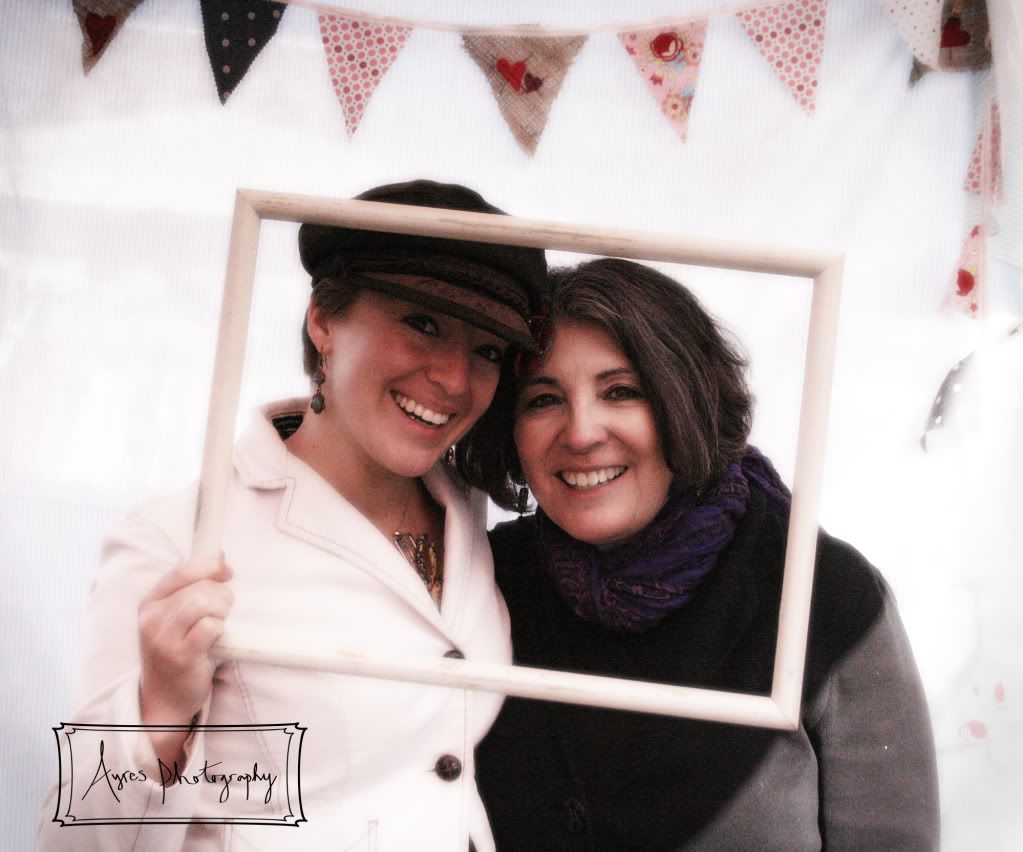
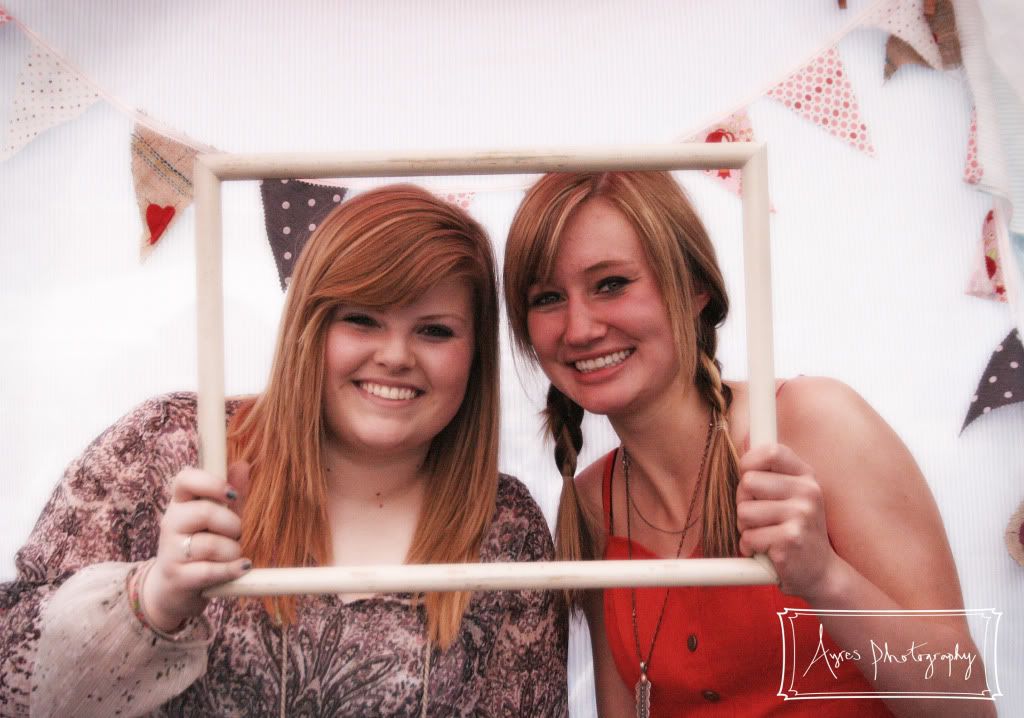
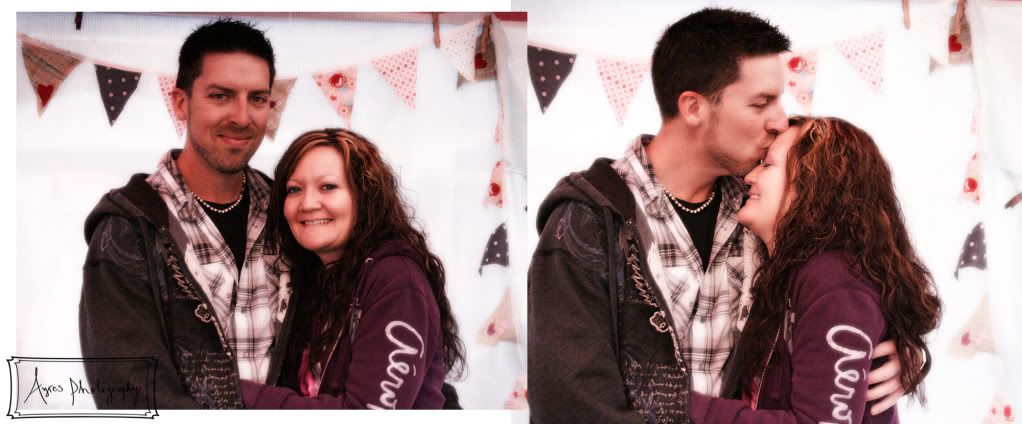
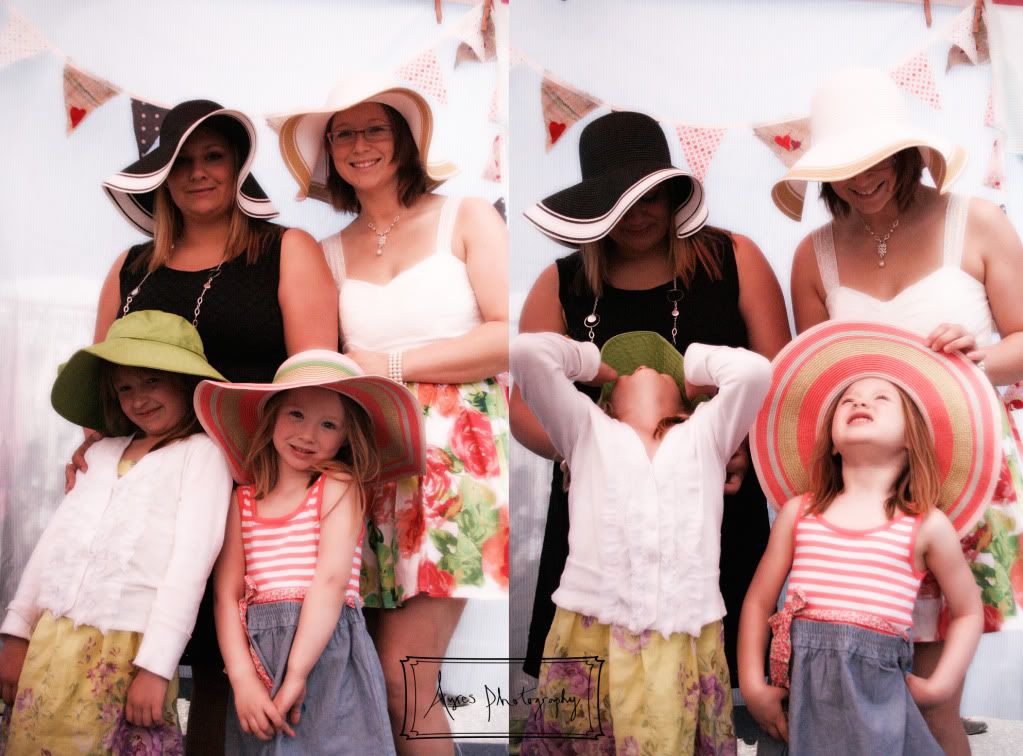
     Which brings me to the whole point of this post. I wanted to share a few shots we did last Saturday, when we set up a background in our market booth and, with the combination of our winning charm and a big sign that said FREE Market Portrait, pulled in some fun families and pairs from the crowd for spur-of-the-moment Mother's Day photographs. This was so much fun. I love to meet new people and get to know their stories... these are some of my favorite shots of the day:


     I hope you, gentle readers, at some point in your lives, get the chance to support someone, and be supported by someone you love in pursuing a dream. It brings joy.

xo

*An explanation: Writing is, and has been for many years, my number one passion and dream (outside of Mammahood). Words still occupy a major portion of my day, everyday. The things I have set aside, for now, are my Etsy shop (more thoughts on the average American consumer's inability to value handmade goods at a later date...), and the opening of my Spoonflower shop. For now, those forms of art will just be for me. 

February 13, 2012

The Book List


Big oops! I forgot to add the book list from the children's literature class. Ah, but never fear, it is now right here:
Just click the crazy long link below to print the PDF.


xo

(Amazing art from one of my favorite Etsians of all time: The Black Apple)

February 10, 2012

Even More Book Love

  *Art courtesy of decortherapia.blogspot.com*

      Hello, my blogland beauties. (Okay, so between writing that first sentence and this one, I just spent 45 minutes being sucked in by the wonder that is Pinterest. Kind of like a squirrel or a small dog distracted by pretty, shiny things.Curse my weakness for aesthetically pleasing objects!) ANYWAY...if you've read any of my recent posts (and by 'recent' I mean the last time I posted which was, I believe, 2 bajillion years ago), you know that I've had books on the mind lately. Yes, more than usual. I taught a small class on children's literature on Wednesday night at our church. Which, A.) was a lot of fun, if I do say so myself, B.) allowed me to put heads together with another fine authorial-type mind, and C.) has given me a great excuse, for the past month or so, to sit and read (or stand and read, walk and read, whatevs). A LOT. And I thought it might be fun, and hopefully beneficial to someone out there, to share the information from said class here in the ol' blogosphere. *Forewarning*: It's a long post, but I'll go ahead and toot my own horn as much as to say 'I think it's worth the read.' Toot toot!

     The focus of the class was finding good, valuable literature for children--getting parents and children to share reading experiences together and to really communicate about what they're reading and learning--beginning with a discussion on why it's so essential to make literature an integral part of our children's lives in the first place. 

     From an early age, even from birth, the act of reading to a child is, of course, much much more about spending time together than anything else. As Elliott D. Landau, former professor of Child Development and Children's Literature at the University of Utah, wrote: 

"But the primary purpose of reading to your child early in his life is not to provide quantities of anything for his future learning; rather, it is to insure a quality experience in your earliest parent-child relationships. The fact that he will be preparing himself for the later discipline of having to read is secondary. Reading experiences for children in the first three years of their lives must not be for instructive purposes; they should be for the opportunity of mother, father, and child’s sharing time, sound, and delight with one another."


    (Don't you love that? 'Sharing time, sound, and delight with one another?')
    
     As our children grow, the reasons for making reading time a part of the daily rhythm of our homes only increase. Hearing sounds and connecting words with those sounds, feeling the patterns in sentence and story and syntax...all these are essential aids in a child's own reading development. And, it has always been my firm belief that, once a child learns how to read, the entire world is open to them. Not just the world of knowledge, though certainly that, but literally the entire world. A reader can learn and do and be anything.(And just in case you're doubting yourselves, my lovelies, yes. That does include YOU.) Literature provides us all with an awareness of worlds and thoughts and experiences outside our own small spheres of existence. One more lit. professor's thoughts on that note:

"The first reason we read is for fun and for escape from the present; to lose ourselves in another person’s life; to reach out from the moorings to which we are tied in time and space to soar off to explore Mars with Ray Bradbury, or the depths of the sea with Jules Verne, or a treasure island with Robert Louis Stevenson, or merely to become acquainted with Mr. Tolkien’s hobbits. To lose ourselves is, then, the first step to joy in reading. It is a step that we never leave behind, for regardless of the degree of sophistication we achieve in our reading, we must always maintain this initial pleasure, or reading will become a bore.
As we mature, a deeper kind of fun emerges, for in living vicariously the lives of fictional or real characters, we can identify with them. We can step back and view life with a new objectivity. In the hectic pace of our own lives, we seldom take the time to study those directions in which we are moving or are being moved. In reading The Scarlet Letter we can watch vividly the effects of a guilty and unconfessed conscience as it destroys the Reverend Dimmesdale...in the story of Samson we can watch what happens when a man allows lust to turn him from the Lord. In the story of the wealthy disciple of Jesus we can see ourselves rejecting the eternal riches offered by the Lord for a destructive materialism in this life. In Macbeth we can study the effect, from a safe distance, of greed for power as it works on the lives of a man and his wife—and we are finally relieved, as in waking from a bad dream, that we are not those miserable people. Still, we have learned from the experience, for literature has intensified and clarified and helped us interpret similar or very different tendencies in our own lives.
Through good books, then, we see portrayed in the lives of the heroes and heroines some of the same forces that are at work in our lives, and we find ourselves studying, as Brigham Young admonished, good and evil and their effects on our race. On this second level we can test our own problems by identifying with literary figures; we therefore experience a new detachment in evaluating our lives and our experiences...literature provides an opportunity for us to probe the universal “truths of the human heart” (Hawthorne),...cosmic, eternal truths, higher truths that produce in us a deeper understanding of and love for our fellowmen, truths that impart to us a sense of community with those fellow beings as well as a moral obligation to care for them."
Richard H. Cracroft

    
    And if that's not reason enough to raise bibliophiles, I don't know what is.

*photo by tinywhitedaisies.tumblr.com/page/104/via Pinterest*

    But what about the what? (What the what?) WHAT should we read? What is worth our time? Which books will instruct and entertain and nourish and enrich the whole child--mind, body, and soul--and which are nothing more than metaphorical processed brain candy (with added MSG)?

    I'm not going to make a list of books that I think you and your family should not read. I am not in favor of book-banning in any form. What you read is your decision. But I am more than happy to share my thoughts and opinions (and the thoughts of wiser peeps than me) on what constitutes worthwhile literature. (See a synopsis of my definition here.)

   *Caveat.* One of the moms in Wednesday night's class brought up the very valid point that if children are forced to read what we want them to read, rather than what they want to read, they will learn only to dread reading. However if they are allowed to read the 'candy' books (ie: the annoying Scooby Doo leveled readers Riley is absolutely addicted to at the mo') when they want to, and learn to associate fun and pleasure with story time, then they will most likely be open to other books, and, eventually, Scooby Doo shall pass. 

    More thoughts from Messrs. Landau and Cracroft:

"After a child has learned the basic skills of reading (methodology notwithstanding), it is imperative that he be introduced to the literature of his language. To learn to read and then to read only to fulfill an assignment is sad. To learn to read and then to read only some of the errant nonsense presently found in certain “reading programs” that teach the children a predetermined sequence of skills from stories that make a mockery of language by their disregard for the importance of literary content is pitiful. In all great literature, in superb children’s literature, too, there is that which vibrates the soul, which enables man and child to enter into the lives and thoughts of others in a way not afforded by those who would engage children in the art of linguistic acrobatics as a substitute for literature."

Elliott D. Landau

"Great literature exudes sweetness and light. Great literature must by nature deal with the old verities or truths of the heart, which William Faulkner has called “the old universal truths lacking which any story is ephemeral and doomed—love and honor and pity and pride and compassion and sacrifice.” Great literature enables us to hold our heads high, to be certain in our hearts that, despite all, truth will prevail. Great literature cuts through the dross and accumulations of earthcrust that build upon our souls, and in cutting through to eternal truths, such literature allows us to focus on the many noble traits of man...the great works of literature enlarge and interpret passages of scripture and make vivid and unforgettable abstract ideas such as, “Wickedness never was happiness,” “Men are that they might have joy,” “Love thy neighbor,” and “Thou shalt not kill”—ideas that we must clothe with meaning through our own experiences that we can better understand through great books and great art or even good books and good art."

Richard H. Cracroft

   Ummm, pretty sure I'm in love with that last quote.   


    So those are some thoughts on the Whys and the Whats. Now how about the How? How do we find the good books? Where, among the bajillions of published tomes in our modern world, do we even begin? Well, gentle readers, I ask you this: how old are your children?

  I was surprised to learn Wednesday night that many parents are not at all familiar with the recommended age divisions that exist in the world of children's lit. Not that age is always a definitive indicator of what a child should be reading, everyone is different, but it's a place to start. So, if you're familiar with these already, feel free to scroll on down the line, otherwise, here you go.

     The five categories within children's literature typically are: Picture Books, Early Readers, Middle Grade, Upper Middle Grade, and Young Adult. 

    Picture books are usually aimed at children ages 0-8 (if you're an aspiring picture book writer you will, however, need to be more specific than that when querying your MS--0-3? 4-8? 5-7?). Nearly always intended to be read aloud, these books are simplistic in language, but can be Marianas- Trench- deep in emotion (it's impossible for me to get through Library Lion without bawling my eyes out), and shorter in word count--usually fewer than 1000 words. And, as the title "Picture Book" might be expected to imply, these books are heavily illustrated with art that is at least as important to, if not more important than, the words in telling the story.  

   Next come Early Readers, also sometimes called Beginning Readers or Leveled Readers. Early Readers are written specifically for kids who are learning to work out the technicalities of our nonsensical, illogical, and yet beautiful English language. Usually, but not always, these kids are between the ages of 5 and 8. Early Readers have a slightly longer word count of up to 5000 words, but are written with a limited and repetitive vocabulary. 

   Middle Grade books are sometimes referred to as Chapter Books because they are, essentially, the first novels a child is presented with. With language progressing beyond that of the Early Readers and a word count increasing to anywhere from 10,000 to 50,000 words, Middle Grade books are perfect for children who are ready for more of a challenging read, more of a story, and characters with whom they can identify (typically ages 8-12). 

   Then we have Upper MGs. This is a relatively new distinction that some publishers do not even recognize as a separate grouping. From what I have read, Upper Middle Grade novels have emerged as a result of the widening gap between the content of Middle Grade and Young Adult books. Upper MGs are written with 12-14 yr. olds in mind--kids who are ready to move beyond Because of Winn Dixie but aren't yet ready for The Hunger Games or Uglies. Word count averages around 60,000. 

   And then of course we have the YAs. Young Adult books are generally full-length novels of 60,000 words or more, aimed at readers 14 and up (some publishers would say 12 and up) and featuring characters in that age range.. Incidentally, the YA room is my favorite section of the library. I may no longer qualify as a young adult, but in my humble opinion, authors who are writing for this age group simply try harder. They have everything else in teenagers' lives to compete with--from personal media to social media to dating to school to hormonal/ emotional upheaval and turmoil--it's just going to take more to hook a YA reader and convince them to sit down and read. 

  Now, having said all that, it's time for another caveat. *Most of the books in a specific age division will be about characters who are that age (ie: Wendy in Peter Pan is 12, you're going to find her in the MGs). The exception to this rule, however, occurs when the content of a story is deemed by publishers too mature or inappropriate for the age grouping into which the protagonist falls. To quote the infamous EA from Editorial Anonymous:

"A Middle Grade book can have doubt, but not depression. It can have flirtation, but not seduction. There can be the bomb, but not the fuse."


  Even with an 11 or 12 yr old main character, a novel dealing heavily with anything from abuse to drugs to drinking to suicide to sex is going to get kicked up into the YAs. Not that there aren't children of that age--or even younger--who are dealing with these issues in reality; there absolutely are. But they are no more prepared to face them in real life than they are in books. That's the point. One could argue that by "protecting" children in this way leaves them naive and vulnerable. Maybe so. But I would submit that it is the parents and caregivers and teachers who should be talking with children openly about these issues, not book characters. It is the idea of destructive, abusive, and harmful behavior being portrayed as 'normal' that we need to be wary of. Shelving these books in the YA section is just a metaphor for what adults ought to be doing in actuality: not sheltering or hiding children from the harsh realities of the world, but saying "I know you don't know how to deal with this on your own yet, so I'm here to help. I am your advocate. I will answer your questions openly and honestly, I will teach you with love, but I won't leave you to meet this on your own."

    Is that helpful at all? I hope so. Now, armed with that knowledge, may I present: 

Amber June's Three Step Plan for Finding Good Children's Literature

     Hurrah! Okay, step one:

READ.
Then, read some more.

     I don't think I really need to go into elaborate detail here. An adult cannot expect to know what is out there in the world of children's lit. if he or she is not reading children's lit. Nor can parents expect their kids to value the reading experience and make time for it if they don't set the example themselves. Now, I know (trust me, I sooo know) that reading takes time. And not everyone has time to spare. So as a last resort fallback to doing the reading yourself, try checking out commonsensemedia.org. I love it. You can look up any book, game, app, movie, or t.v. show in their system and read reviews from parents and educators, as well as detailed synopses of content. Their 10 Beliefs from their Mission Statement:

  1. We believe in media sanity, not censorship.
  2. We believe that media has truly become "the other parent" in our kids' lives, powerfully affecting their mental, physical, and social development.
  3. We believe in teaching our kids to be savvy, respectful and responsible media interpreters, creators, and communicators.  We can’t cover their eyes but we can teach them to see.
  4. We believe parents should have a choice and a voice about the media our kids consume and create. Every family is different but all need information.
  5. We believe that the price for free and open media is a bit of extra homework for families. Parents need to know about the media their kids use and need to teach responsible, ethical behavior as well as manage overall media use.
  6. We believe that through informed decision making, we can improve the media landscape one decision at a time.
  7. We believe appropriate regulations about right time, right place, and right manner exist. They need to be upheld by our elected and appointed leaders.
  8. We believe in age-appropriate media and that the media industry needs to act responsibly as it creates and markets content for each audience.
  9. We believe ratings systems should be independent and transparent for all media.
  10. We believe in diversity of programming and media ownership.


   Step two:

Solidarity Sister.

   Allow me to expound. Hopefully every parent out there has friendships, or at least acquaintances, established with other parents who share your views on parenting, on standards, on priorities. Friends (or family members) whom you know would, if put in a position to do so, teach your child about life in a way you would want them to be taught. I am blessed to have many friends and family member like this in my life. The point of this step is: Talk to them! Share with each other the good books, the great reading experiences. Let one another know what books you've encountered that have not provided an uplifting experience for your family (but remember not to be offended if your friends disagree).  Help each other out. Solidarity sister (or brother, as the case may be)!

And step three: 

"C" is for Community

  Here's a not-so-secret secret about children's librarians. No one becomes a children's librarian because it's the only job they could get. They're not in it for the money, or the glamour, or the employee discount. People become children's librarians because THEY LOVE CHILDREN'S LITERATURE. With a passion. And they know children's literature. And, they want to pass that knowledge on to you! Think about it. Have you ever met a children's librarian who was like, "Sorry, I'm not going to help you find books your kids will enjoy and benefit from. That's your problem." Ummm, no. At least I haven't. Note to fellow Missoulians: Our local librarians are a-maz-ing. Especially the Youth Events Coordinator, Dana, who always has the time to talk with parents about what their children are interested in, who always will walk you right to the book you're looking for, who always has at least a dozen recommendations right off the top of his head. So grateful for him. 

So, who are the librarians in your community? How about great teachers or school librarians? Bookshop owners? The point is, literature by nature creates communities of like-minded people by giving them shared experiences through books. Step outside your comfort zone and talk to people!

The "C" is also referring to larger community--the worldwide community of writers, publishers, and educators involved in the world of children's lit. Specifically applied: book awards. We've all heard of The Newbery, The Caldecott, and maybe even The National Book Award, but what about The Carnegie? ALA Notables? The Michael L. Printz? The Young Reader's Choice? These are all awards that, in one way or another, have to do with excellence in literature for children and young adults. And there are lists of them ready and waiting at just about every library in the country, as well as on the American Library Association website. Now I'm not saying that you should assume that just because a book has won an award it's great literature. Or even that it's good literature. That's a matter of opinion and yours might differ from the award committee's (mine does about 25% of the time). And you should definitely not assume that because a book has won an award you don't need to wonder what your child might be reading about. But I am saying that, like the age divisions, it's a place to start.
   
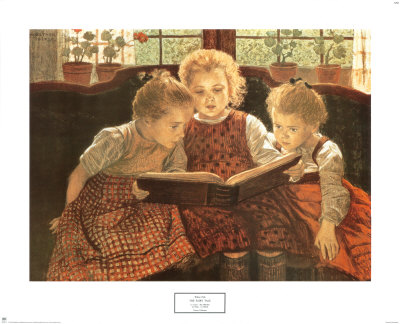
     *my favorite painting: The Fairy Tale by Sir Walter Firle, via art.com*

    And that's that. three steps that I hope are helpful, plus an inordinate amount of rambling. I'd love to know your Whys and Whats and Hows; please share them in the comments! Then go grab your kids and read.

xo


January 3, 2012

On Not Giving Up...

I needed this clip for encouragement today. Thanks to KindnessGirl for leading me to it.
I thought maybe someone else might need it too, so I'll share.
Sharing is nice.


November 4, 2011

Home Again, Home Again


Hello blogland. I'm home.
True to my word, and despite temptation to do otherwise, I have not written a post in over three weeks. It's been enough to send me into a serious non-blogger mindset (and by non-blogger I mean someone who doesn't photograph everything she makes, does, eats, reads, etc...all while thinking up quirky and clever titles for posts and hearing the content sentences form in her mind). But I'm about to get over that. I might, in the next few weeks, have to backtrack and share a couple of the things I was tempted to blog during my hiatus, like a beautiful Fall Festival with my little ones, but for now, I have soooo much to say about my trip to Houston for Quilt Market.

Ahhh, Quilt Market...with your hustle and bustle and schmancy hotel stays...your seriously huge convention center show floor that is really not friendly on backs and feet... and most of all, your rows and rows of crafty eye candy. 
Behold: 


(Lark by Amy Butler)


 (Seriuosly cute embroidery patterns by Penguin and Fish)

(A Dia de los Muertos themed booth by Alexander Henry)


(Anna Maria Horner's Loulouthi now in flannels and velveteen- hullo? To die for.)

And there's more. Soooo much more. But one thing I actually did  in the blogger mindset while at market was interview a half-dozen or so designers. Like, in person. (I know, right?) So I'm holding back those photos for when I post the interview series (which I'm calling 5 Minutes With a Fabric Designer) starting next Monday. Yay!

Now on to the eye candy outside the convention center.
The thing about going to a conference or a trade show like Quilt Market is that if you have any interest at all in the city that you're going to, don't get your hopes up to see any of it. Unless you extend your trip and plan ahead, you're really only going to see a hotel room, a couple of restaurants and a convention center floor. That's just not why you're there. But Saturday in Houston, I had a rough day. 

Raw honesty time.
I mentioned in my pre-market post that I was going to Houston to teach a school house (mini workshop) with Sandi. What I  didn't  reveal was that my reasons for attending were actually threefold. 
1.) The school house. 
2.) A chance to hob-knob a little with the awesome peeps who will (hopefully) someday soon want to publish a project book I've proposed. 
3.)I was also going to QM to show a portfolio of my own artwork to fabric manufacturers, with the hopes of one day becoming a fabric designer myself. 
Items one and two on the list went well. Really well. Item three...As any artist/ writer/ photographer/creator-of-anything can tell you, this takes guts. I'm not tooting my own horn here, it's just a fact. Putting yourself on a piece of paper and asking a stranger to tell you how you've fallen short, in the hopes of improving and growing, is an emotionally draining process. And being a thousand (ish) miles away from my husband and children- my true comforts and strengths- while doing it, quite frankly sucked. 
I felt weakened and beaten down, even though I know in reality it made me stronger.

Anyway...point. What was my point? Oh, right. Saturday was a rough day. And after a party and a dinner where I had to keep a smile on my face, and a cab ride back to the hotel to save my aching feet, I just needed to be alone for awhile and do something creative. So I changed into jeans and flat shoes (hallelujah for flat shoes) grabbed my camera and set out into the night. I didn't go far (don't worry Mom and Dad). Actually, I mostly stayed inside. The Hilton we (by 'we' I mean Sandi and I and Sandi's mom Jodi and the adorable Sarah Jane) were in had these amazing blown glass sculptural light fixtures that I really wanted to photograph...


I did go out a little...


...to take in the calming night air. 
It's amazing to me, having had my creations under the microscope all day long, how the thing that healed me most was to create more.  Even if it was a different medium. Even if the end product was nothing to write home about. The process of seeing and capturing something visual from my own point of view is always transforming. As is writing about it here.

Thanks for reading my ramblings, blogland.

Oh, and if you were one of the attendees at our school house and you heard me mention the free embroidery patterns, they are coming. I promise. They should both be on my 'make' page by Saturday, so keep checking back.

Fabric designer interviews start next week. I think we'll kick it off with Sandi Henderson (c'mon, you knew that was coming) and the one and only David Butler. 

xo